
Patient Guide
Patient guide
The information below is not meant to alarm you. It is meant to make sure that the decision you take is an informed one — every operation carries risk, and knowing it is part of consenting to it.
Patient Guide
Before surgery
The single most useful thing you can do is be complete. Every item below changes how the operation and the anaesthesia are planned.
Tell us everything
All medical conditions and your full history — noted on the medical form and discussed at consultation.
Every medication
Including anything taken recently, herbal supplements and vitamins.
Allergies and reactions
To antibiotics, anaesthetic drugs or any other medicine.
Bleeding and healing history
Prolonged bleeding, poor scarring or excessive bruising in the past.
Previous surgery
Of any kind, and any recent or long-term illness.
Psychological history
Treated in confidence, and relevant to planning realistic goals.
No aspirin for 10 days
No aspirin, aspirin-containing medicines or anti-inflammatory drugs for at least ten days before surgery — they increase the risk of excessive bleeding.
Stop smoking 2 weeks before
Smoking restricts blood flow to the skin and is the single biggest cause of healing problems, especially in facelift and abdominoplasty.
Risks & honest expectations
The general risks of surgery
This is not written to alarm you. Risks are minimised by careful patient selection and by an experienced surgical, anaesthetic and nursing team — but complications can happen, and consenting to an operation means knowing them.
Risk is higher with diabetes, poor circulation, heart, lung or liver disease, smoking, a family history of blood clots, and with certain medications. All of it must be disclosed before treatment is booked.
- Bruising and swelling
Usually settling in one to two weeks, sometimes taking a month or more.
- Wound healing
Wounds may take longer to heal; there may be some bleeding, or infection needing antibiotics.
- After general anaesthesia
A chest infection, or a sore throat from the breathing tube.
- Blood clots
Extremely rare, but dangerous if a clot travels to the heart, brain or lungs — early walking is part of the prevention.
- Scarring
In a small number of patients scars turn pink, raised and irregular; these flatten and fade over time.

Recovery timeline
Recovery, in general terms
- First 48 hours
Most patients need help at home. Pain is experienced differently by everyone; medication is prescribed after every operation.
- Day 2
Slow walking starts — for every patient, every procedure. It is the simplest protection against clots.
- Weeks 1–2
No regular aerobic or vigorous activity, to reduce bleeding, swelling and bruising.
- Month 1
Weight lifting and contact sports are usually allowed again.
Timescales given for each procedure are approximations, not promises. Yours is discussed at consultation.
All patients are encouraged to start slow walking on the second post-operative day. Regular aerobic and more vigorous activity is not allowed during the first two weeks, to reduce the risk of bleeding, swelling and bruising. Weight lifting and contact sports are usually permitted at one month.
Antibiotics and insurance
Antibiotics are used where a procedure may release bacteria into the bloodstream. Cosmetic surgery is considered elective surgery and is not covered by most insurance policies.
Continue reading

Procedures
Every procedure begins the same way: with your anatomy, your goal and an honest answer about wha…
Open
Patients from abroad
Patients travel to Antalya from the UK, Germany, Scandinavia, Russia and Australia. The practica…
Open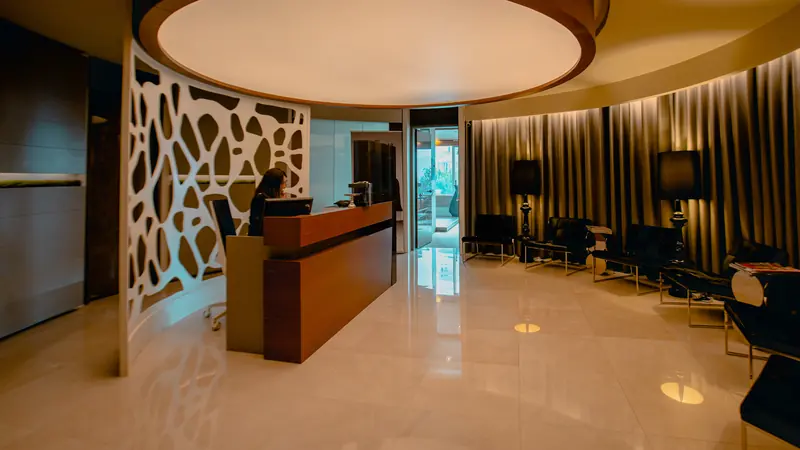
The clinic
Established in 2000 in Lara, at the centre of Antalya — with the hospital where operations are p…
OpenContact
Start with a conversation
Tell us what you are considering. You will get an honest answer about whether it is the right procedure for you — including when the answer is no.
- +90 532 722 84 52 Coordination · Sibel Beken Öksar
- WhatsAppFastest reply — write in English, French or Turkish
- Antalya · LaraYeşilbahçe Mah. Metin Kasapoğlu Cad., Gökhan İş Merkezi No:19 D:9, Muratpaşa / Antalya, Türkiye
- EN · FR · TRConsultations directly with the surgeon, no interpreter
